


Customers no longer visit websites only during business hours. They browse products, compare services, and ask questions early in the morning, late at night, and even on weekends. If no one is available to respond, businesses risk losing valuable opportunities before a conversation even begins.
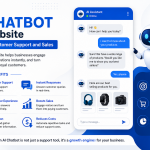
This is why an AI Chatbot for Website has become an essential business tool rather than an optional feature. It gives visitors instant assistance, answers questions in real time, guides users through their buying journey, and provides support around the clock without increasing operational costs.
Modern AI chatbots are much more advanced than traditional rule-based bots. They understand natural conversations, provide context-aware responses, recommend products, qualify leads, and even schedule appointments. Whether you run an ecommerce store, a SaaS platform, a healthcare website, or a consulting business, an AI chatbot helps improve customer experience while increasing team productivity.
In this guide, you'll learn how AI chatbots work, why businesses are adopting them, and how they can transform customer communication.
What Is an AI Chatbot?
An AI Chatbot Solution is an intelligent software application designed to communicate with website visitors using Natural Language Processing (NLP) and Machine Learning (ML). Instead of relying on simple predefined replies, AI chatbots understand user intent and generate meaningful, context-aware responses in real time.
Unlike traditional chat widgets that follow rigid decision trees, AI-powered chatbots continuously improve their responses by learning from conversations and business knowledge. They can answer customer questions, recommend products, collect information, and assist users without requiring human intervention for every interaction.
Today, businesses use AI chatbots to automate repetitive conversations, reduce support workloads, and provide a consistent customer experience 24/7.
Why Every Modern Website Needs an AI Chatbot
Website visitors expect immediate responses. Waiting several hours—or even until the next business day—for an email reply often leads customers to leave and choose a competitor.
An AI chatbot helps eliminate these delays by providing instant assistance whenever someone visits your website.
Some of the biggest benefits include:
- Deliver instant customer support 24 hours a day.
- Reduce repetitive tasks for customer support teams.
- Improve visitor engagement and user satisfaction.
- Capture qualified leads automatically.
- Help visitors discover the right products or services.
- Increase conversion rates through personalized recommendations.
- Lower customer support costs without compromising service quality.
Instead of replacing your support team, an AI chatbot allows employees to focus on complex conversations while routine questions are handled automatically.
How Does an AI Chatbot for Websites Work?
Although AI chatbots feel like real conversations, the technology behind them follows a structured process.
Step 1: Understanding Customer Questions
When a visitor types a message, the chatbot uses Natural Language Processing (NLP) to understand the intent behind the question rather than simply matching keywords.
For example, all of the following questions have the same meaning:
- Where is my order?
- Can I track my shipment?
- Has my package been dispatched?
An intelligent chatbot recognizes the intent and provides the correct response regardless of how the question is written.
Step 2: Finding the Right Information
Most modern chatbots rely on Retrieval-Augmented Generation (RAG) to deliver accurate responses.
Businesses create a knowledge base containing information such as:
- Product catalogs
- FAQs
- Company policies
- Documentation
- Website content
- PDF manuals
- Support articles
- Shipping information
Instead of generating random answers, the chatbot searches this knowledge base and retrieves the most relevant information before responding. This approach improves accuracy and helps reduce AI hallucinations.
Step 3: Generating a Natural Response
Once the relevant information is found, the chatbot generates a conversational response that feels natural and easy to understand.
Rather than returning robotic replies, AI creates responses that match the visitor's question while maintaining your brand's tone and communication style.
Step 4: Escalating Complex Conversations
Not every customer issue should be handled by AI.
When a conversation involves technical troubleshooting, billing disputes, or sensitive customer complaints, the chatbot can automatically transfer the chat to a human support representative.
It also passes the complete conversation history, allowing support agents to continue the discussion without asking customers to repeat themselves. This creates a seamless customer experience while improving response efficiency.