
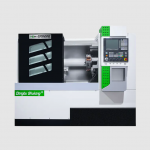

Walk into any machine shop and you'll notice the lathe isn't just equipment — it's the backbone of the whole operation. A metalworking lathe determines what parts a shop can take on, how fast they can turn orders around, and whether they can hold tolerances tight enough to satisfy demanding clients. That's why procurement teams rarely buy on spec sheets alone.
The first thing most buyers ask about is spindle bore size, since it dictates the maximum bar stock diameter a shop can run without switching to chucking work. A shop producing small precision components has very different bore requirements than one machining longer shafts or hydraulic cylinder bodies. Getting this wrong means either wasted capacity or a machine that can't handle the job mix a facility actually sees.
Swing over bed and distance between centers come up just as often. These two numbers together define the physical envelope of parts a metalworking lathe can accommodate, and buyers sourcing for job shops — where part variety is the norm rather than the exception — tend to prioritize flexibility over raw size. A machine that's slightly undersized for one-off large parts but well suited to the daily production mix often makes more practical sense than chasing maximum capacity.
Spindle speed range and horsepower matter too, particularly for shops working across a range of materials — mild steel, stainless, aluminum, and harder alloys all call for different cutting speeds. A metalworking lathe with a narrow speed range forces compromises on feed rate or tool life, which shows up later as inconsistent surface finish or slower cycle times.
Control system choice is another point buyers weigh carefully. Manual lathes still have a place in prototyping and repair work, while CNC-equipped machines suit repeatable production runs where operator-to-operator variation needs to be minimized. Distributors sourcing for resale often stock both types, since customer needs vary widely by shop size and application.
Tailstock configuration, chuck compatibility, and available tooling options round out the checklist. A metalworking lathe that pairs well with a shop's existing tooling inventory reduces onboarding friction, which is often an underrated factor in how quickly a new machine actually starts contributing to output.